

Can I use a core drill bit on schist?
Schist is a medium - to coarse - grained metamorphic rock that has a characteristic foliated texture. This foliation is due to the alignment of platy minerals such as mica, which gives the rock a tendency to split along parallel planes. When considering using a core drill bit on schist, several factors come into play, and as a core drill bits supplier, I'm well - equipped to provide insights on this topic.
Understanding Schist's Properties
Schist can vary widely in its composition and hardness. The presence of different minerals like quartz, feldspar, and mica can affect its drillability. Quartz, being a hard mineral, can cause significant wear on drill bits. Mica, on the other hand, with its platy structure, can lead to the rock splitting in an irregular manner during drilling. The hardness of schist is typically in the range of 3 - 7 on the Mohs scale, depending on the specific mineral content.
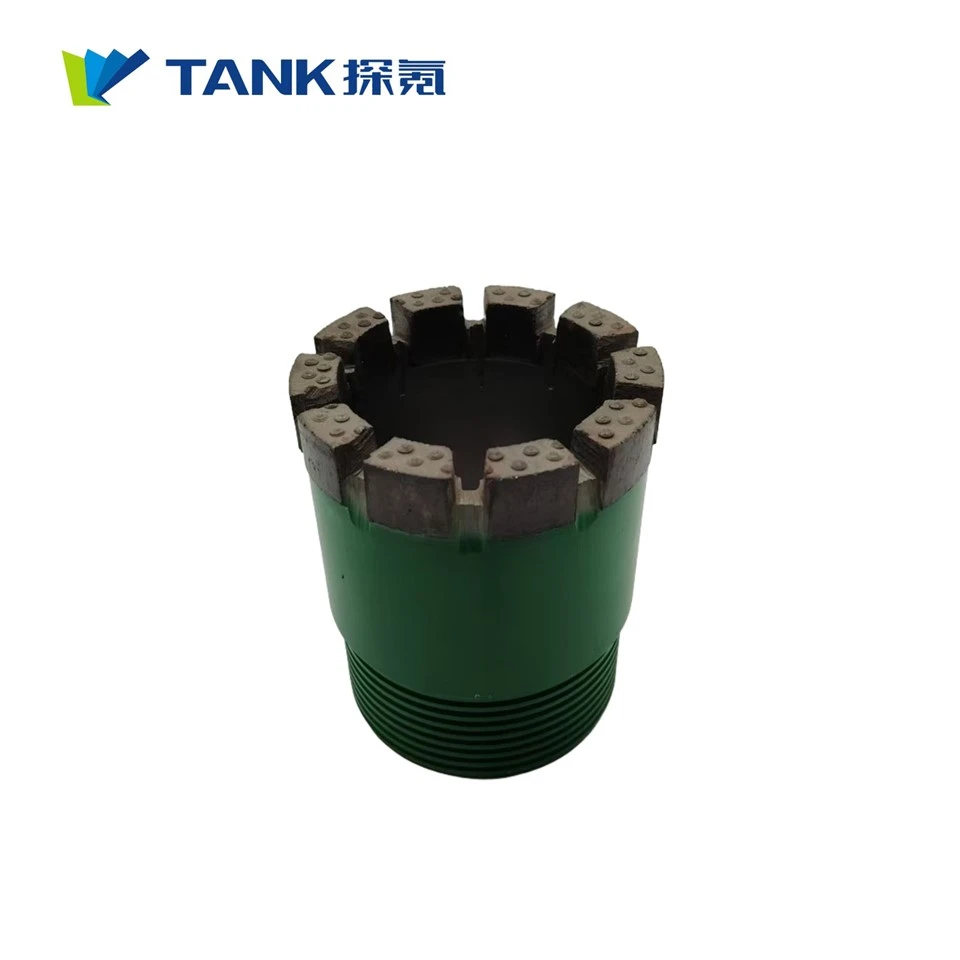

Types of Core Drill Bits Suitable for Schist
-
PDC Coring Bits
PDC (Polycrystalline Diamond Compact) coring bits are a popular choice for drilling in schist. These bits are designed with synthetic diamond compacts that are extremely hard and wear - resistant. The PDC Coring Bits can effectively cut through the hard quartz grains in schist. The diamond compacts are bonded to a tungsten carbide substrate, providing a strong and durable cutting edge. PDC bits can offer high penetration rates and good core recovery in schist, especially when the rock is relatively homogeneous. -
Double Pipe Hot Press Core Bit
The Double Pipe Hot Press Core Bit is another option for schist drilling. This type of bit has a double - pipe design, which helps in better core retrieval. The outer pipe rotates while the inner pipe holds the core sample. The hot - press manufacturing process ensures a strong bond between the diamond segments and the bit body. In schist, the double - pipe design can prevent the core from being damaged by the rotation of the outer pipe, and the diamond segments can cut through the rock with precision. -
Spiral Frame Coring Bit
Spiral Frame Coring Bit is also suitable for schist. The spiral frame design allows for efficient flushing of cuttings from the borehole. This is important in schist, as the foliated nature of the rock can cause cuttings to accumulate easily. The bit's open - frame structure helps in maintaining good circulation of the drilling fluid, which in turn cools the bit and removes the debris. The diamond - impregnated segments on the spiral frame can cut through the schist, and the design also helps in reducing the risk of bit balling.
Factors Affecting Drill Bit Performance in Schist
-
Drilling Parameters
The drilling parameters such as rotational speed, feed rate, and hydraulic pressure play a crucial role in the performance of the core drill bit in schist. A too - high rotational speed can cause excessive wear on the bit, especially if the rock contains hard minerals like quartz. On the other hand, a too - low rotational speed may result in inefficient cutting. The feed rate should be adjusted according to the hardness of the schist. In harder schist, a lower feed rate may be required to prevent the bit from overloading. The hydraulic pressure is important for flushing the cuttings and cooling the bit. -
Rock Heterogeneity
Schist can be heterogeneous, with variations in mineral content and foliation. These variations can pose challenges for the drill bit. For example, if the bit encounters a section of schist with a higher concentration of hard minerals, it may experience more wear. The foliation can also cause the bit to deviate from the intended drilling path, leading to a poor - quality borehole. In such cases, the choice of drill bit and the adjustment of drilling parameters become even more critical. -
Drilling Fluid
The type of drilling fluid used can significantly affect the performance of the core drill bit in schist. A good drilling fluid should be able to cool the bit, lubricate the cutting surfaces, and carry the cuttings out of the borehole. In schist, a water - based drilling fluid with additives may be used. The additives can help in stabilizing the borehole, especially in areas where the schist is prone to sloughing due to its foliated structure.
Maintenance of Core Drill Bits for Schist Drilling
Proper maintenance of core drill bits is essential for their long - term performance in schist. After each drilling operation, the bits should be cleaned thoroughly to remove any debris and drilling fluid residue. Inspect the bit for any signs of wear, such as damaged diamond segments or a worn - out bit body. If any damage is detected, the bit should be repaired or replaced as soon as possible. Storing the bits in a dry and clean environment can also prevent corrosion and damage.
Conclusion
In conclusion, it is possible to use a core drill bit on schist, but the choice of the right bit and the proper adjustment of drilling parameters are crucial. PDC coring bits, double - pipe hot - press core bits, and spiral - frame coring bits are all viable options for schist drilling, each with its own advantages. As a core drill bits supplier, we understand the challenges of drilling in schist and can provide high - quality bits that are designed to meet these challenges.
If you are involved in schist drilling projects and are looking for reliable core drill bits, we invite you to contact us for more information and to discuss your specific requirements. Our team of experts can assist you in selecting the most suitable bits for your project and provide you with all the necessary support for successful drilling operations.
References
- Deer, W. A., Howie, R. A., & Zussman, J. (1992). Rock - forming minerals: Vol. 3A, Non - silicates: Oxides, hydroxides, sulphides, sulphates, carbonates, phosphates, halides. Longman Scientific & Technical.
- Goodman, R. E. (1989). Introduction to rock mechanics. Wiley.
- Mitchell, J. K. (1993). Fundamentals of soil behavior. Wiley.