


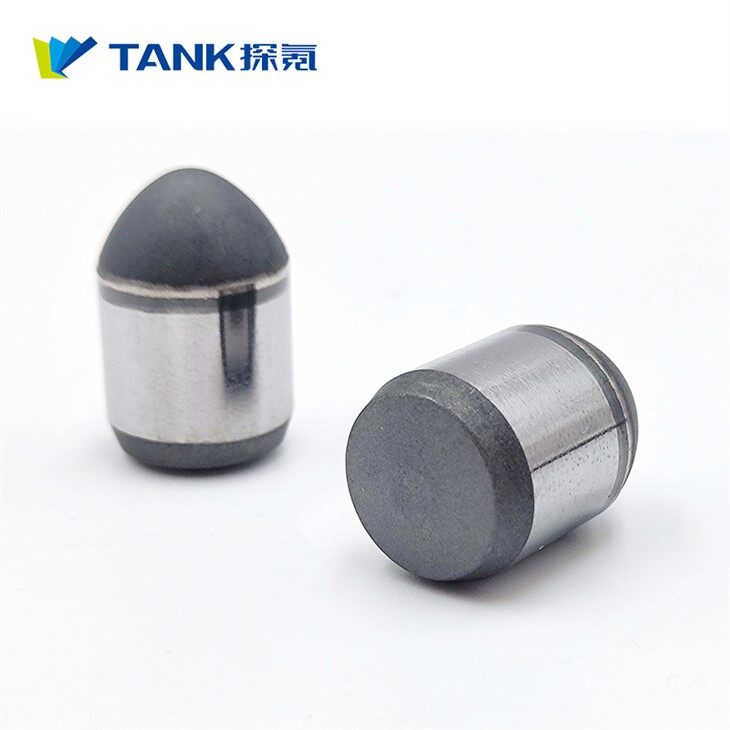
Product Concept – Why Shaped PDC Cutters?
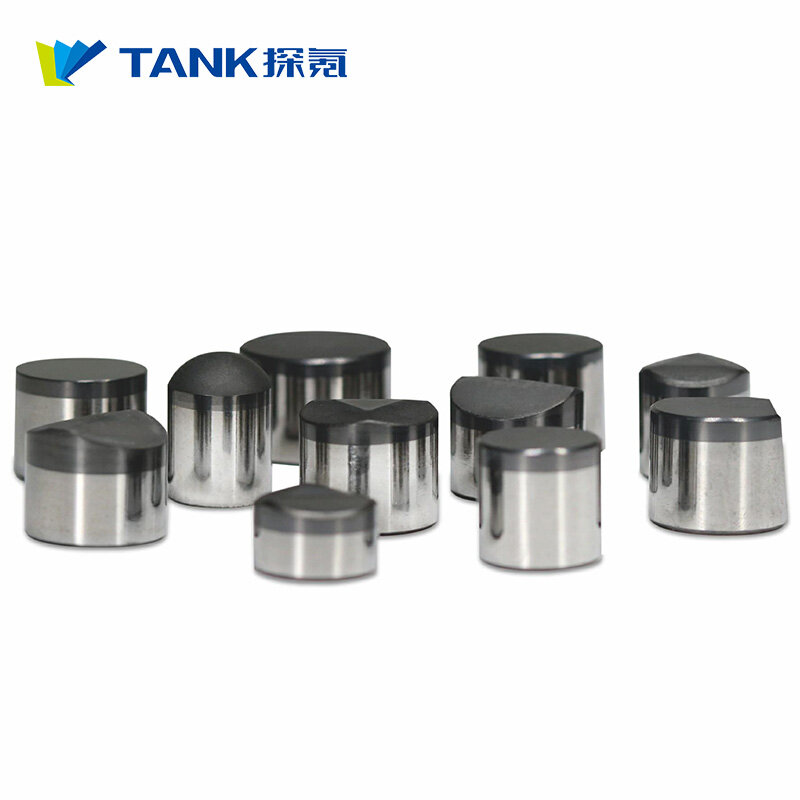
As drilling programs move to deeper, hotter and more abrasive formations, standard flat cutters are not always enough. Shaped PDC cutters were developed to cope with these challenges. Instead of a simple flat surface, the cutting face is sculpted into domed, stepped, ridged or other 3D geometries.
These profiled PDC inserts:
Distribute contact stresses more efficiently
Manage cuttings flow and cooling around the cutter
Control depth of cut to reduce bit whirl and stick–slip
Improve engagement with interbedded and non-homogeneous rocks
TANK DRILLING produces a full range of shaped PDC cutters for PDC bits, hybrid bits, reamers, under-reamers and special mining tools.
Types & Geometries
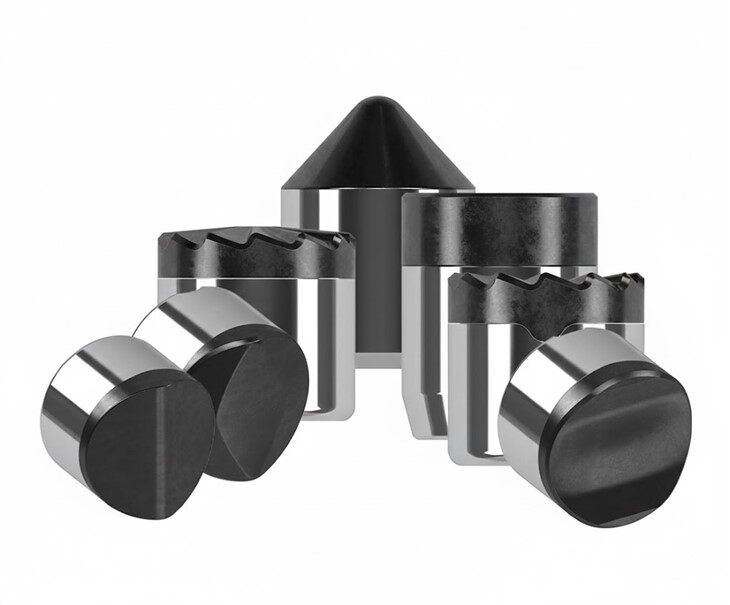
Our shaped PDC cutters include, but are not limited to:
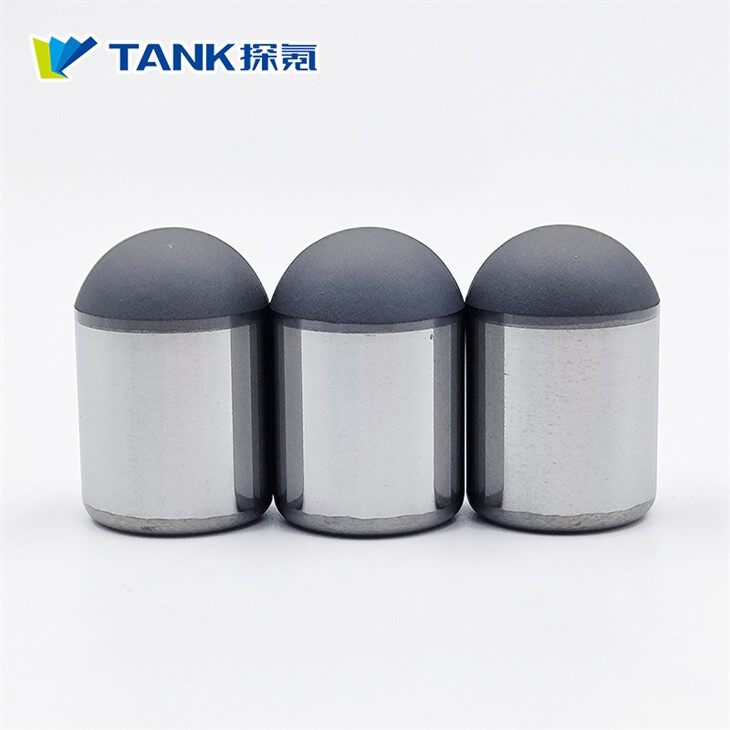
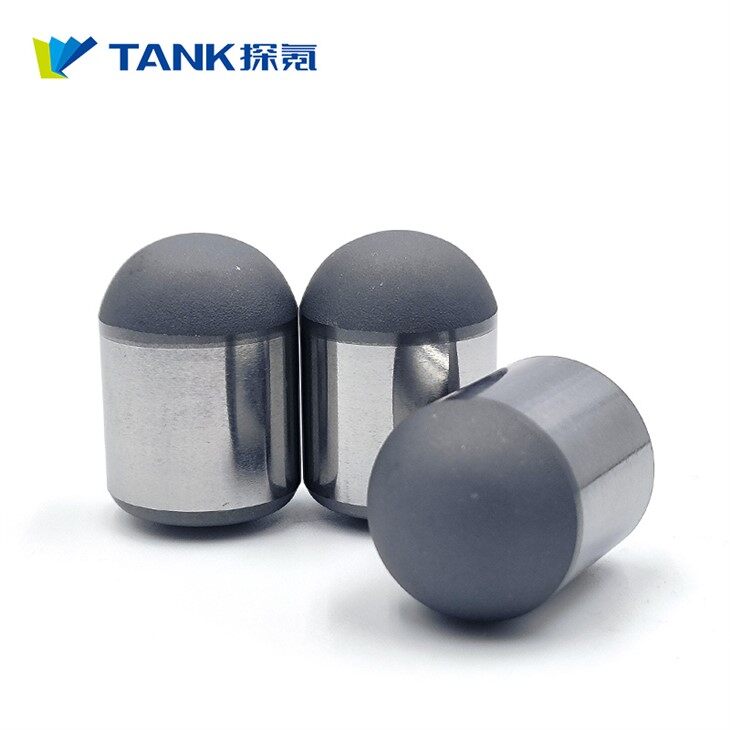
Domed and semi-spherical cutters
Widely used on tricone bits, DTH tools, road-headers and picks. The rounded diamond surface offers excellent impact resistance and is ideal for impact-fracture and crushing mechanisms.
Step and ridge cutters
Raised ridges or steps concentrate load at specific points, increasing local stress and promoting efficient shearing. These cutters can achieve higher ROP in hard and abrasive formations while controlling torque fluctuations.
Conical and parabolic profiles
Often used as secondary or backup cutting elements to stabilize the bit and improve hole quality.
Custom 3D shapes
Working together with bit designers, we can develop profiled polycrystalline diamond inserts tailored for special tools or particular formations.
All these shapes are based on the same HPHT polycrystalline diamond technology as our flat cutters but with modified diamond table geometry and interface design to match their specific roles.
Structure, Interface & Multi-Layer Design
Shaped PDC cutters share a similar layered architecture:
Polycrystalline diamond top with a 3D working surface
Tungsten carbide substrate with optimized cobalt content
Serrated or petal-type interface between the two layers
For high-impact applications such as picks and rock-breaking tools, we use tougher diamond mixes and reinforced interfaces. Many of our shaped cutters adopt a multi-layer diamond design in which the top region is tuned for wear resistance and the lower region for toughness.
In dome-type PDC buttons, this structure gives a working life 5–10 times longer than conventional tungsten carbide buttons, with productivity gains of 30–40% reported in quarrying and mining jobs.
Manufacturing & Testing
Because shaped cutters operate under more severe load conditions than standard planar inserts, we apply stricter testing criteria:
Impact testing at higher energy levels
Thermal cycling to simulate downhole temperature fluctuations
Abrasion tests on high-abrasivity rock samples
Verification of 3D profile geometry and surface finish
Every shaped PDC cutter is checked for cracks, voids and interface defects. This ensures reliable performance whether the cutter is used on a premium oilfield bit or a heavy-duty mining tool.

Application Example – Hard Sandstone Quarry Drilling
A mining contractor operating in a hard quartz-rich sandstone quarry used DTH hammers fitted with conventional carbide buttons. Tool life was short and bit changes were frequent, leading to significant downtime.
The contractor switched to hammers and pilot bits equipped with TANK DRILLING domed shaped PDC cutters on the gauge and nose rows:
Average bit life increased to 5–7 times that of the previous carbide-button design.
Meterage per bit rose from about 250 m to more than 1,300 m in the same formation.
Shift productivity improved by over 35%, while fuel consumption per meter drilled dropped noticeably.
The shaped PDC cutters absorbed impact energy while maintaining a sharp cutting interface, delivering both faster penetration and longer service life.

Typical Uses & Benefits
Shaped PDC cutters are suitable for:
PDC bits working in hard, interbedded or mechanically difficult formations
Hybrid bits combining rolling cones and fixed cutters
Tricone bits with PDC dome inserts on the gage row
DTH bits, percussion tools, picks and road-headers
Centralizers, stabilizers and other wear-facing components
Main benefits include:
Improved control of depth of cut and torque
Better cooling and cuttings evacuation around the cutting structure
Higher ROP in specific hard or abrasive formations
Enhanced impact resistance and reduced cutter chipping
Longer tool life and fewer tool changes
Because shaped PDC cutters interact with the rock in a different way compared with flat inserts, they allow bit designers to fine-tune both aggressiveness and stability for each drilling program.
Sizes, Options & Custom Service
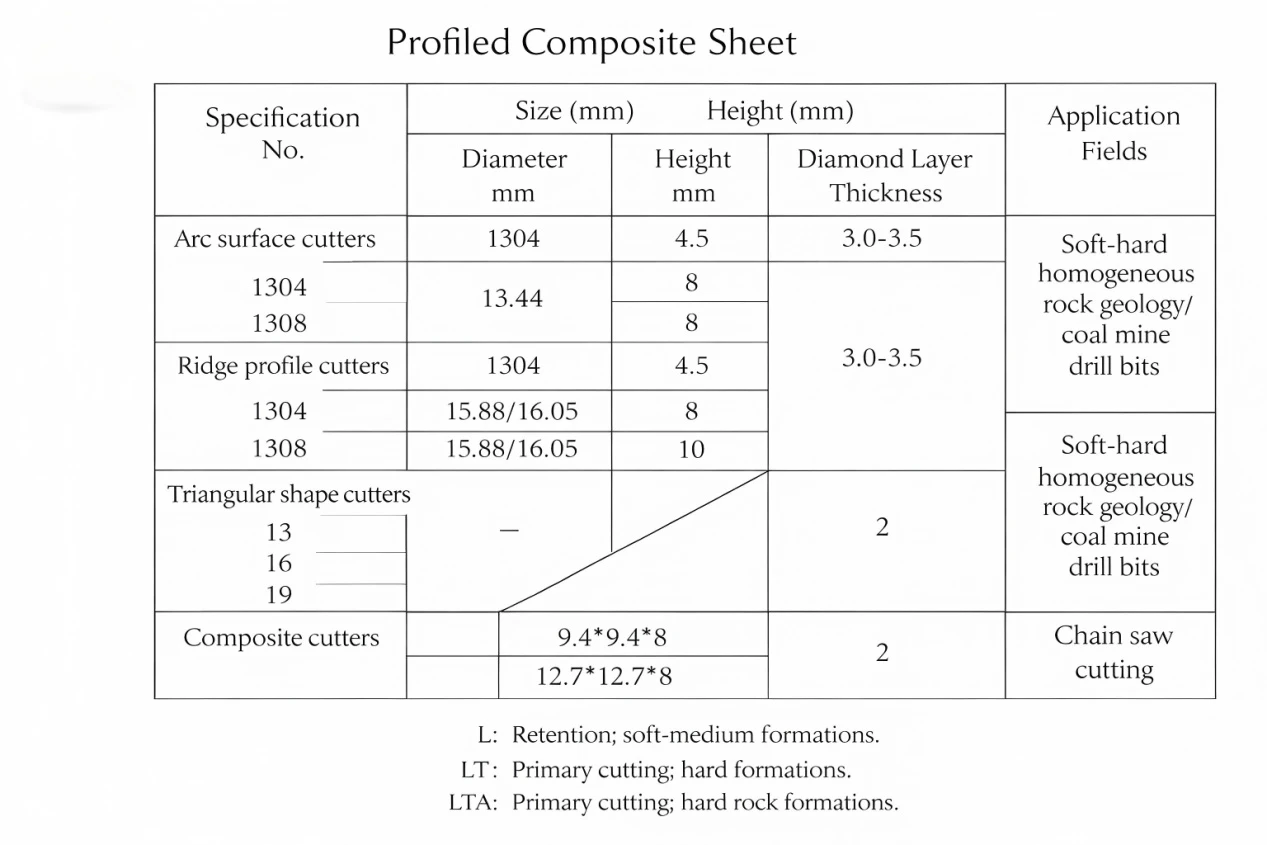
We provide common diameters such as 1308, 1313, 1608, 1613, 1913 and 1916, as well as special sizes. For each shape we can adjust:
Profile height and radius
3D feature geometry (steps, ridges, channels, etc.)
Diamond grade for impact or abrasion resistance
Substrate length and transition design
TANK DRILLING also supports project-based development. For customers looking for step-shaped PDC cutter dealers or needing special profiled PDC blanks, our engineers can help translate performance targets into practical cutter designs.
FAQ – Shaped PDC Cutters
Q1: When should I choose shaped PDC cutters instead of flat cutters?
A1: Shaped cutters are recommended for formations where torque control, thermal management or impact loading are critical, such as hard abrasive sandstones, interbedded sequences or high-dogleg wells.
Q2: Can shaped cutters be mixed with flat cutters on one bit?
A2: Yes. Many designs use flat inserts on the cone and nose, with shaped cutters on the shoulder and gage to balance aggressiveness and stability.
Q3: Do you offer small quantities for prototyping?
A3: We can supply limited quantities for trial runs and help you evaluate shaped PDC cutters in the field before moving to large-scale orders.
Q4: What information do you need to design a custom profile?
A4: Formation description, bit type, operating parameters, target ROP, previous bit dulls and specific problems (chipping, heat checking, stick–slip, etc.) all help us propose an appropriate shaped PDC cutter solution.


