


Product Details
A standard bit that earns its place on every rig
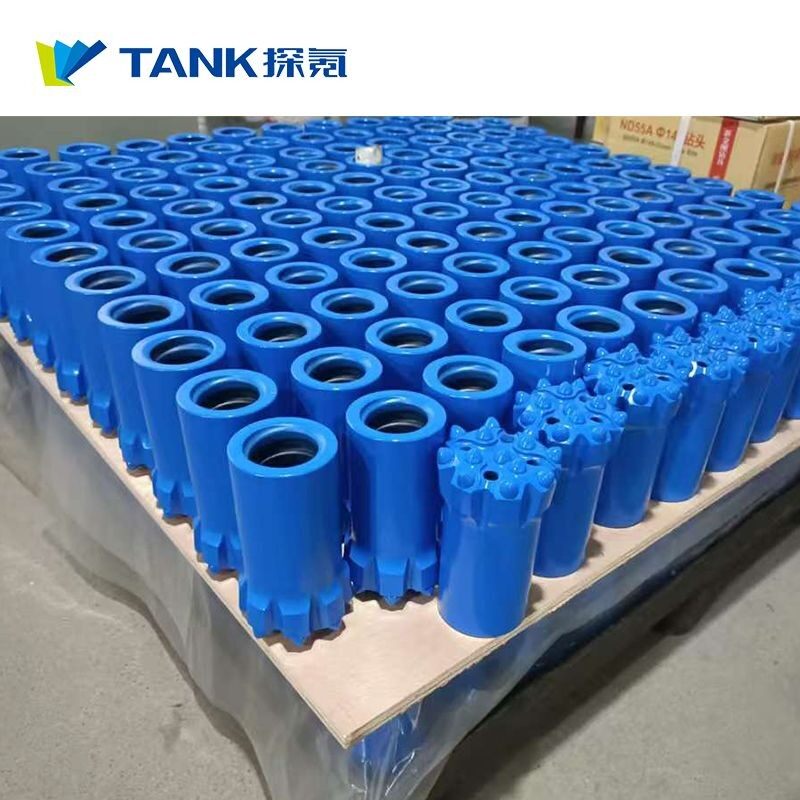
In top hammer drilling, the "standard" threaded button bit is not basic-it is foundational. Most drilling teams rely on it because it works across diverse sites without forcing constant tool changes. A Reliable Threaded Button Bits page should explain what matters in real production: controlled wear, stable hole quality, and consistent performance from one bit to the next.

How threaded button bits work in a top hammer system
Top hammer drilling transfers impact energy from the rock drill through the shank adapter and drill rods, then into the bit. The bit converts that energy into rock fragmentation while rotation helps expose fresh rock to each strike. This method is widely favored for blast holes, tunneling rounds, and construction drilling where hole depth and diameter fall within typical top hammer ranges. The threaded connection must stay accurate under repeated shock loading-because thread fit affects everything: vibration, energy loss, and premature wear.
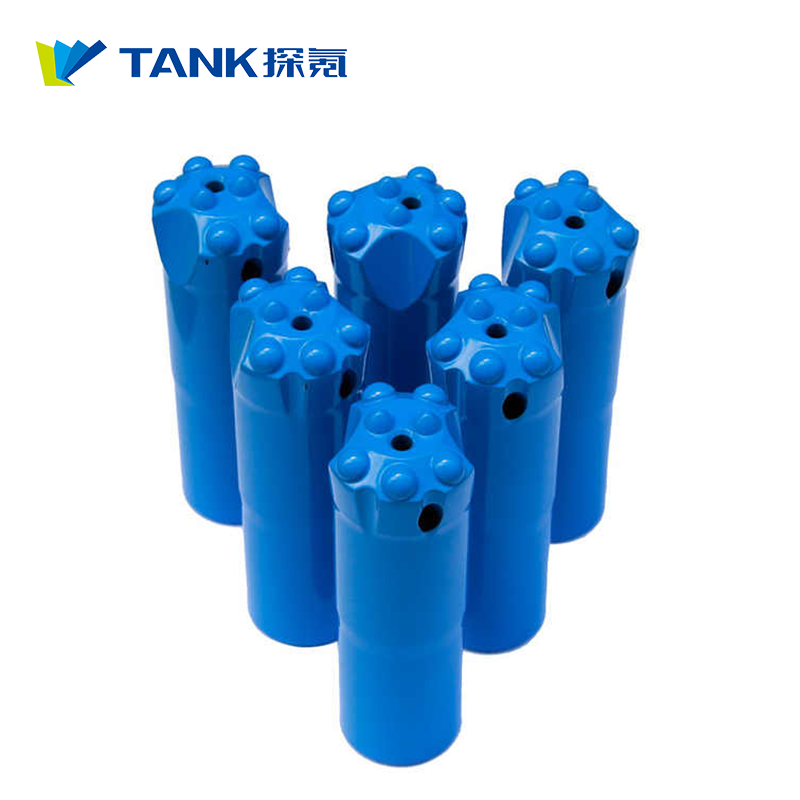
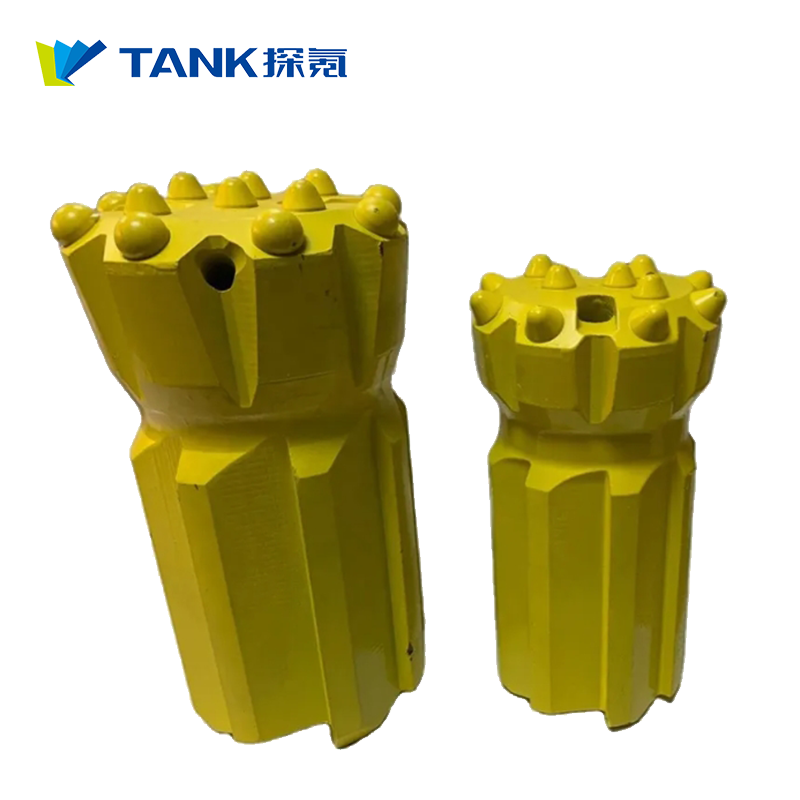
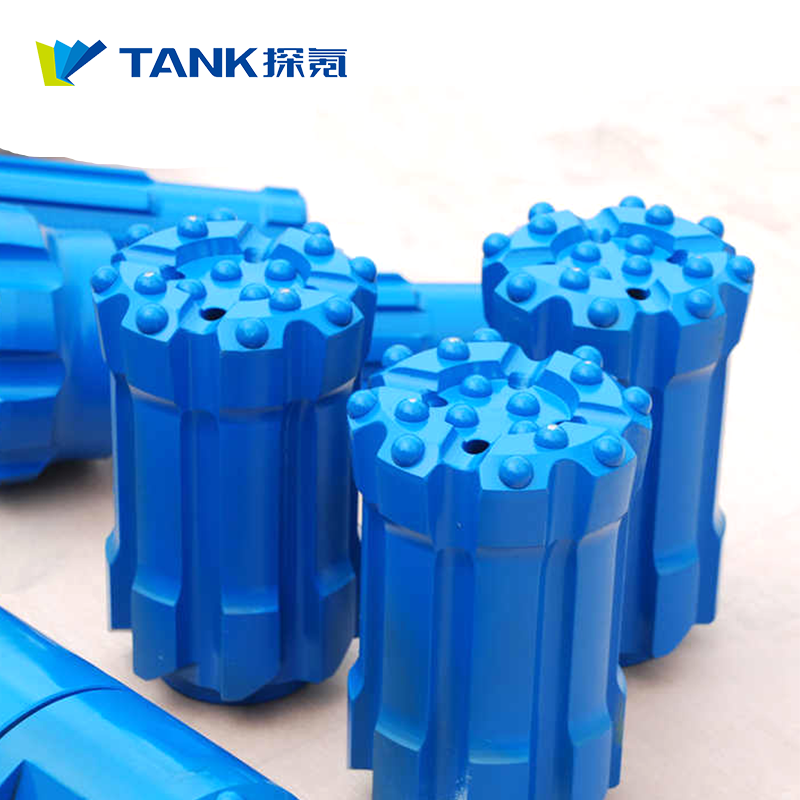
Core structure: steel body, carbide buttons, engineered flushing
A standard threaded button bit consists of:
A high-strength alloy steel body designed to withstand impact and torsion
Cemented carbide buttons positioned for balanced rock breaking and wear
Face grooves and flushing paths that evacuate cuttings and reduce regrinding
A thread interface that matches the rod system and maintains concentric rotation
In the field, these elements interact. Poor flushing increases heat and regrinding. Inconsistent button heights cause uneven load and early breakage. A loose thread fit increases vibration, which accelerates button chipping and skirt wear. A reliable bit is built to avoid these predictable failure modes.
Button shapes and what they change
Button shape is not a catalog detail-it is how you tune the bit's behavior.
Spherical buttons typically offer stronger resistance to abrasion and chipping, suitable for abrasive formations and longer service life.
Semi-ballistic or ballistic styles can deliver faster penetration in less abrasive rock but may require better control of drilling parameters.
Conical options are used in specific applications where concentrated cutting is beneficial.
Your best choice depends on a combination of hardness, abrasiveness, and the drilling objective: maximum meters per shift, or minimum cost per meter.
Face design options: choosing stability or speed
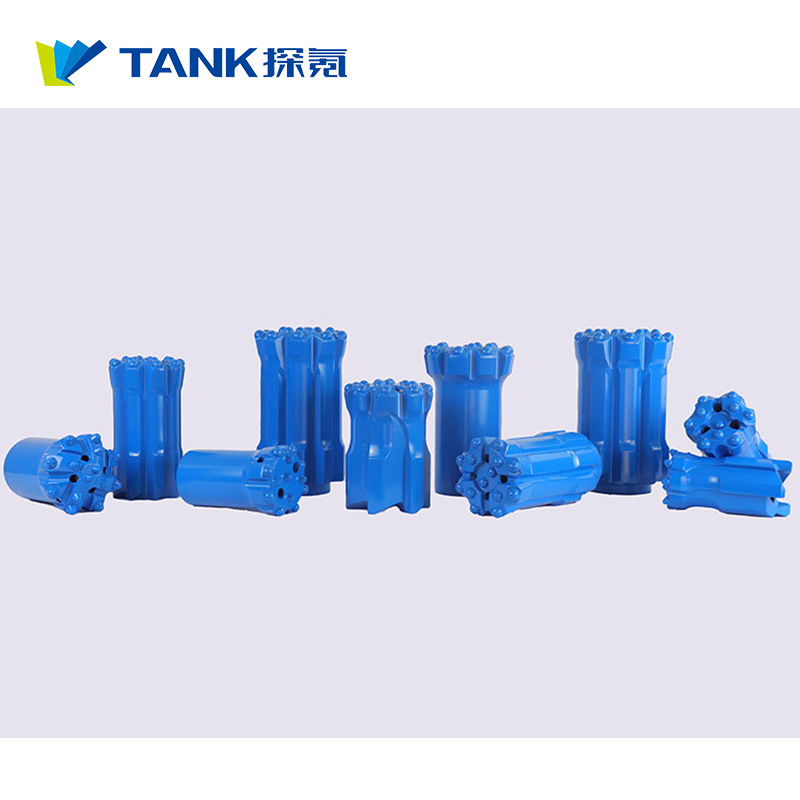
Standard threaded bits commonly use face designs such as flat, drop-center, and concave/convex variations. A drop-center design often helps hole straightness and collaring control. A flat face tends to handle hard rock and mixed formations with good stability. A concave profile can provide strong all-round performance in many rock types. The best face is the one that reduces your corrective drilling and keeps the hole "true" without forcing aggressive feed.
Manufacturing process: consistency is the real feature

Two bits can look similar but behave differently. The difference is manufacturing control:
1.Forging and material preparation to ensure body strength
2.CNC machining to keep thread accuracy and concentricity
3.Heat treatment to balance hardness and toughness for fatigue resistance
4.Button insertion with controlled seating and alignment
5.Final inspection to eliminate variability
This is how a supplier earns repeat orders: not by describing hardness, but by delivering the same drilling feel across batches.
Quality inspection focused on field outcomes
A practical QC process checks what breaks first in real work:
Thread gauge verification and surface inspection
Hardness consistency after heat treatment
Button seating integrity and height uniformity
Visual checks for micro-cracks, poor brazing/press-fit, or surface flaws
Final runout/concentricity checks where applicable
Consistency reduces downtime because crews can predict change intervals and carry the right spares.
Real application case (example from typical production drilling)
In a quarry bench drilling program, standard threaded button bits are often used for repetitive blast hole patterns. When the bit design provides reliable gauge retention and stable penetration, drillers maintain consistent hole diameter and depth with fewer reaming corrections. This improves blast performance and reduces time spent reworking holes-an indirect but real productivity gain.

Standard bit vs retrac bit: when each wins
A standard threaded button bit is often the best choice when the formation is relatively stable and the objective is cost-efficient drilling with predictable performance. A retrac bit becomes valuable when sticking risk or fractured ground makes retrieval a repeated problem. In other words: standard bits maximize simplicity and wide applicability; retrac bits prioritize stability in broken ground.
Operating notes to extend service life
Match air/water flushing to cuttings volume; inadequate flushing accelerates wear.
Avoid excessive feed that overloads buttons; let impact do the work.
Use correct rotation speed for your formation to prevent skidding and uneven wear.
Monitor early gauge wear; address it before hole size control is lost.
Service and delivery
We support common thread systems and provide selection guidance based on formation type, rig setup, and target hole quality. Export packing and documentation are handled for international delivery, and technical support is available for matching rods, couplings, and shank adapters within a complete top hammer system.
Company strength behind the tools
TANK DRILLING supports top hammer drilling tools as a complete product family, with stable production capability and quality control processes designed for repeatable performance. Field feedback is incorporated into button layout tuning, heat treatment optimization, and thread interface improvements-so the next batch performs like the last batch you trusted.


FAQ (EN)
Q: Are threaded button bits suitable for all rock types?
A: They cover a wide range, but button shape and face design should match formation hardness and abrasiveness.
Q: How do I choose between spherical and ballistic buttons?
A: Spherical favors wear life; ballistic can increase penetration in less abrasive rock.
Q: What causes early button loss?
A: Common causes include poor flushing, excessive feed, vibration from thread mismatch, or unstable ground conditions.
Q: Can you supply bits compatible with common R and T thread systems?
A: Yes-common systems are supported, and matching advice is available.
Q: What information should I provide for selection?
A: Rock type, hole diameter, rig model, rod thread type, and current bit performance issue.


