


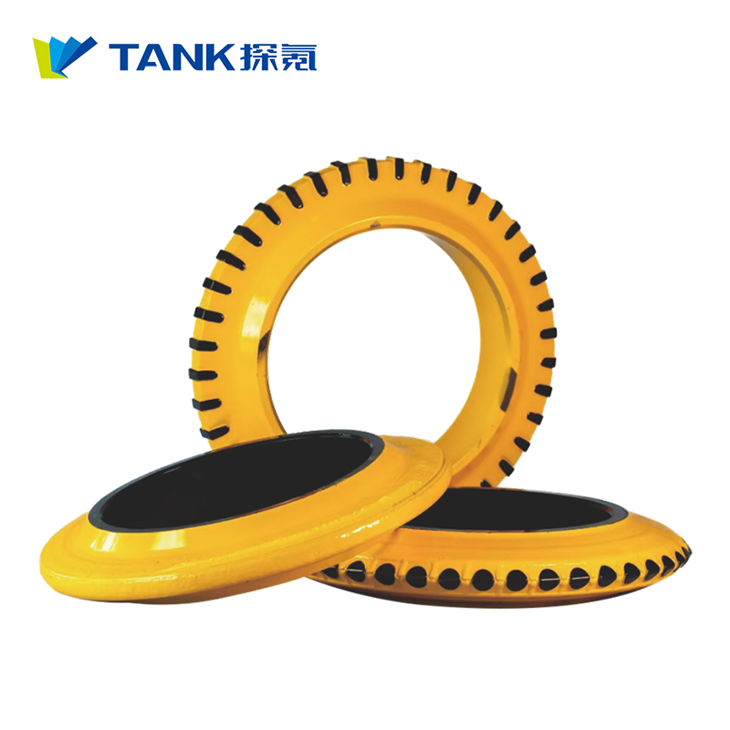
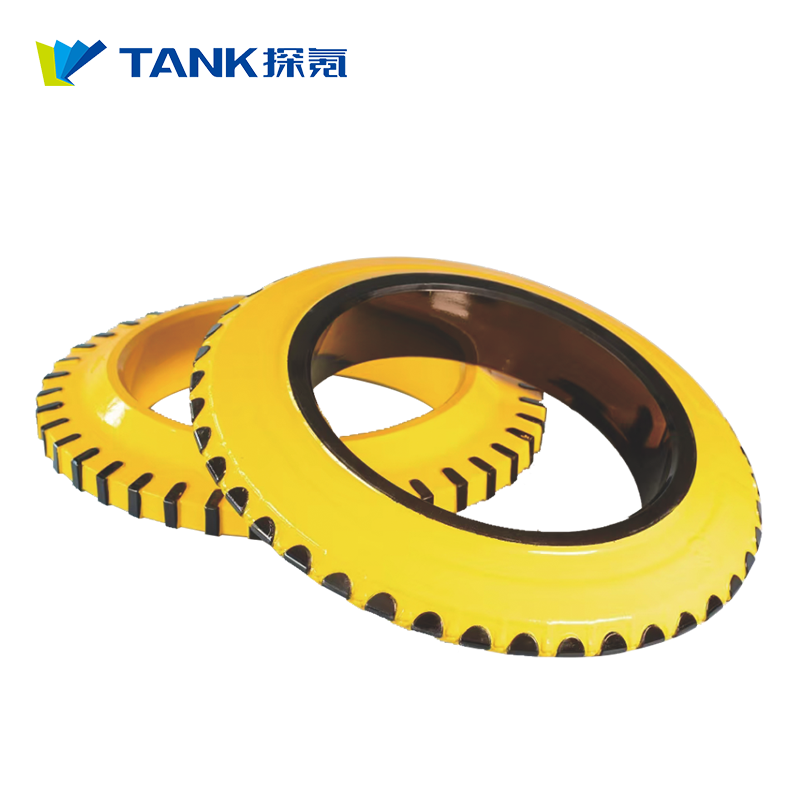
Standard Cutter Ring for TBM
| Material Grade | Target Geological Formations |
Performance Characteristics |
|
TK55T |
Extremely hard rock with high impact loads | ◎ Wear Resistance:High ◎ Impact Toughness:Outstanding |
|
TK60T |
Moderately abrasive &impact formations | ◎ Wear Resistance:Good ◎ Impact Toughness:Good |
|
TK65T |
Highly abrasive stable formations | ◎ Wear Resistance:Outstanding ◎ Impact Toughness:High |
Shield Tunneling Cutter Rings
| Material Grade | Optimal Application Conditions | Performance Characteristics |
|
TK50D |
Extreme impact resistance required | ◎ Wear Resistance:Good ◎ Impact Toughness:Outstanding |
|
TK55D |
General impact conditions | ◎ Wear Resistance:Outstanding |
| ◎ Impact Toughness:Good |
The company makes full use of the advantages of materials in the national key laboratory of ZCC Group,and has cooperated with famous universities in China,such as University of Science and Technology Beijing,Yanshan University and Central South University for a long time to develop new materials for cutter rings and tackle key problems in heat treatment process.On the basis of grade H13,it has successively developed various grades for cutter rings,such as ZY55TDZY60TDZY65T.Its material properties cover all soft,medium and hard strata and meet the requirements of long- distance tunneling.
Gradient Hardness Cutter Rings
Our company has pioneered a series of innovative cutter ring technologies, including: Gradient-hardness cutter rings ,Ultra-coarse-grained carbide composite rings ,Carbide-insert reinforced rings ,Brazed carbide sheet rings ,Plasma-clad surfacing rings. These cutting-edge solutions deliver exceptional performance in challenging geological conditions, particularly in strata containing high quartz content or mixed abrasive/impact loads.

The gradient cutter ring can guarantee that the cutter ring edge has very high hardness HRC59-61 and such hardness can resist to the extremely poor external working environment (ie.strata with a very high quartz sand content)effectively.Meanwhile,the hardness of the inner ring is HRC48-52 and such hardness can guarantee excellent impact resistance,absorb the external impact work and prevent the cutter ring from breakage;the hardness of the middle part is HRC53-59,the hardness transits freely and shows gradient changes,and the advantage of such cutter ring comes out in the strata with a high quartz sand content requiring wear resistance and meanwhile containing boulders requiring impact resistance.
Gradient Hardness Technology Advantages
|
Zone |
Hardness (HRC) |
Functional Benefit |
|
Outer Edge |
59-61 |
◉ Extreme wear resistance for quartz-rich formations |
|
Middle |
53-59 |
◉ Smooth hardness transition |
|
Inner Core |
48-52 |
◉ Superior impact absorption |
Proven Effectiveness:
➤ 40% longer service life in quartzite formations (SiO₂ > 70%)
➤ 30% higher impact resistance in boulder-mixed strata
Toothed cutter ring
The cutter ring adopts an interference fit with the hard alloy. Using press pressure, the hard alloy column teeth are pressed into the alloy holes of the cutter ring. The ball tooth holes of the cutter ring securely hold the alloy column teeth through the material's elastic deformation, extending the cutter ring's service life by utilizing the wear resistance of the hard alloy.

Plasma cladding surfacing cutter ring
The plasma powder welding technology is used to clad hard alloy powder onto the cutter ring substrate, forming a metallurgical bond between the powder and substrate to ensure welding strength. Its key advantages include superior collapse resistance compared to standard hard alloy, along with reduced risks of peeling and collapse.
Hard alloy block composite cutter ring
The cutter ring and hard alloy are joined through brazing, achieving metallurgical bonding between the hard alloy, brazing filler metal, and steel substrate via high-temperature diffusion of the filler metal. This process utilizes the wear resistance of the hard alloy to extend the cutter ring's service life.
As the component directly responsible for rock fragmentation, the cutter ring's performance largely determines the hob's effectiveness and service life. Optimal performance and maximum tunneling mileage can only be achieved when the cutter ring is perfectly matched to the geological conditions.
Divided by shape

Flat-edge cutter ring Arc-edge cutter ring Sharp-edge cuterring
Flat-edge cutter rings are recommended for soft strata tunneling; arc-edge cutter rings are suitable for medium-hard strata, as they provide optimal penetration and cutting capabilities while maintaining wear resistance; sharp-edge cutter rings are advised for hard rock formations to prevent excessive shield thrust requirements and avoid hob damage.
The edge width significantly influences the hob's wear resistance and cutting performance. Wider blades enhance wear resistance but reduce cutting capability, while narrower blades improve cutting capability at the expense of wear resistance. Typically, wide edges are used in soft rocks, and standard or narrow edges are employed in hard rock formations.


