


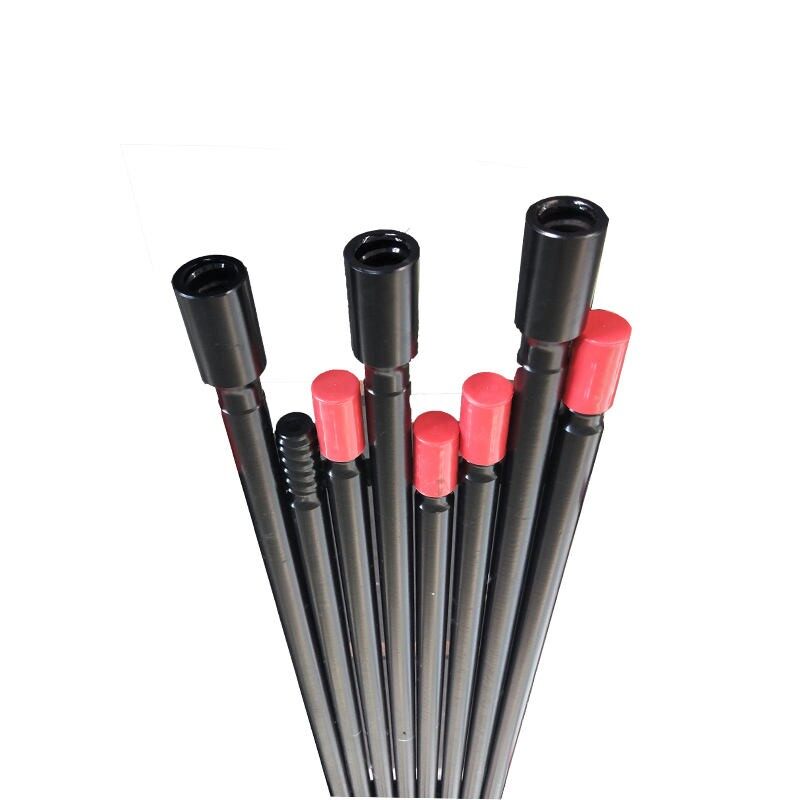
Product Introduction
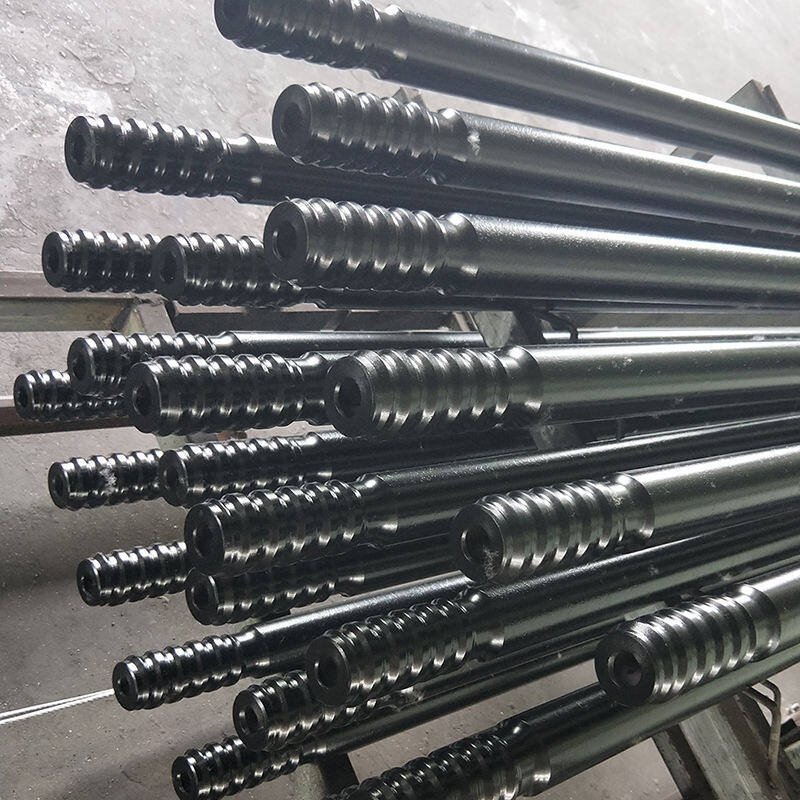
Stiff Bench Drilling Drill Rods are made for repeatable meters in surface patterns and long-hole production, where straightness and flushing stability protect both drilling speed and blast quality. With optimized rod geometry and reliable threads, they reduce energy loss across longer strings and help keep holes on design. For quarry benches and production rings, rod consistency is what keeps the whole cycle predictable.

Products Description
Bench and long-hole drilling: the economics are different
Surface bench drilling and long-hole production are volume games. The drilling plan is repetitive, holes are often longer, and the cost of small inefficiencies compounds fast. A slightly bent rod, a worn thread, or poor flushing doesn't just slow one hole-it affects an entire pattern, which then affects fragmentation, loading, and downstream crushing. That is why Stiff Bench Drilling Drill Rods emphasize straightness, stiffness, and stable flushing behavior across longer drill strings.
What matters most as the string gets longer
As rod length increases, alignment becomes harder to maintain. Any runout or thread play magnifies vibration, which reduces effective impact energy at the bit. Operators respond by changing feed and rotation to stabilize, and penetration drops. A rod designed for bench and long-hole work needs to:
Maintain straightness under load
Keep thread interfaces tight and repeatable
Support efficient flushing through the rod string
Resist wear and surface damage in tough handling environments
Rod types used in bench and long-hole work
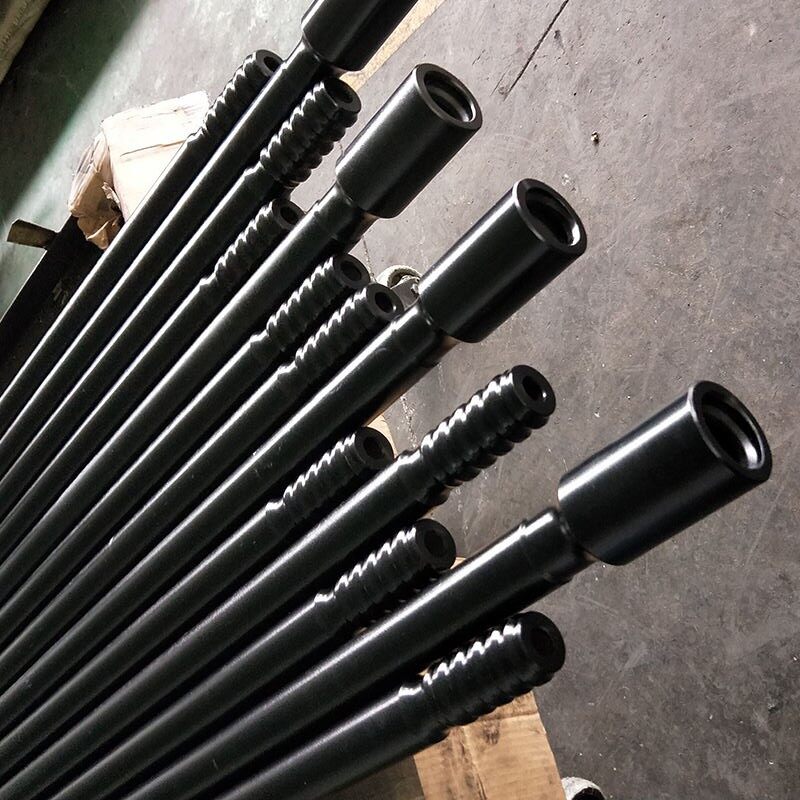
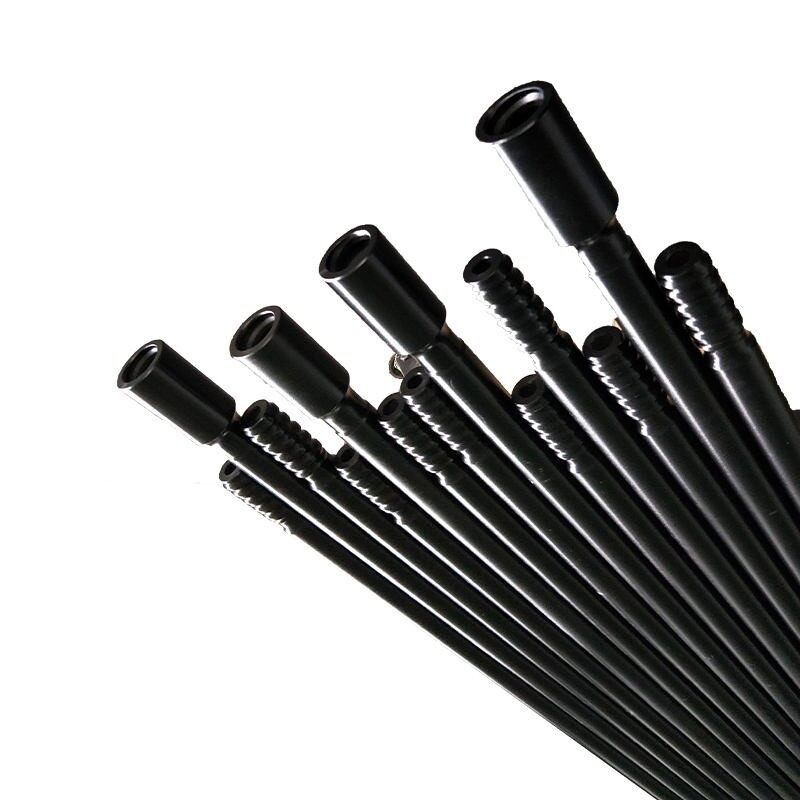
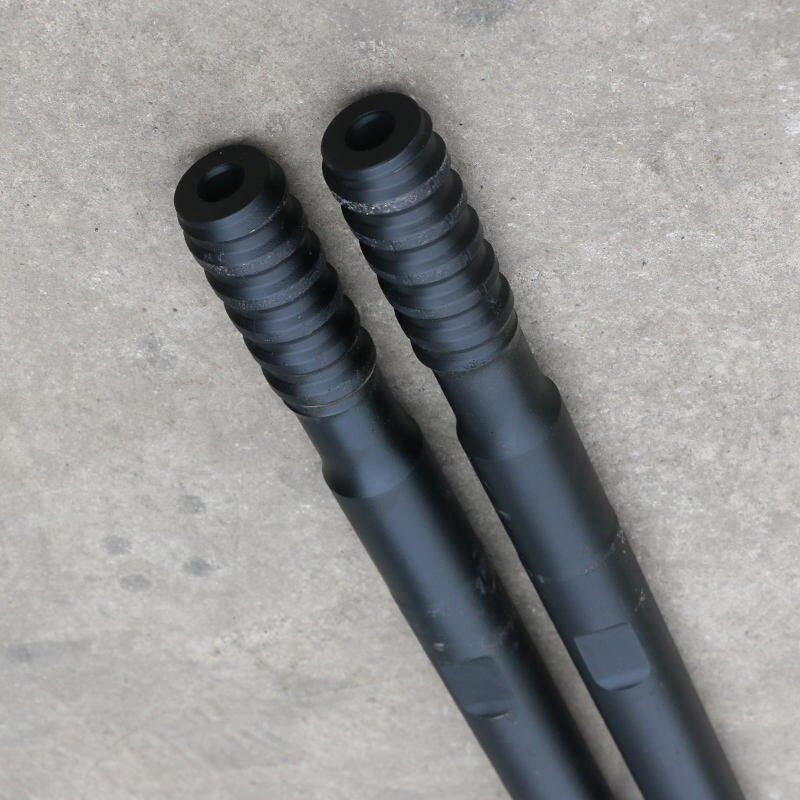
Bench drilling commonly uses extension-style rods (often MM) with coupling sleeves, as well as MF rods in certain setups for quicker handling and improved alignment at the start. Round rods are widely used for their alignment behavior, while hex rods can provide additional stiffness and robust handling in specific operations.
The right selection depends on your rig, hole depth, and the balance you want between fast handling and straight-hole control.
Surface hardening and wear control
Bench environments are harsh on rod surfaces: dust, abrasion, and repeated handling. Surface hardening can dramatically slow down wear at high-contact zones and protect thread ends from early damage. Combined with a tough core, this approach reduces the chance of early fatigue failure while keeping the outer surface resistant to scarring. When rods hold their surface condition, they hold their straightness longer-and straightness is directly tied to hole quality.
Thread systems and compatibility
Bench and long-hole projects often run standardized thread systems across fleets to simplify inventory and maintenance. A rod supplier must deliver consistent thread accuracy so rods, couplings, and shank adapters work as a system. Poor thread consistency causes:
Faster coupling wear
Harder breakout and more downtime
Increased vibration and energy loss
Accelerated bit wear and lower penetration
A consistent rod line solves these problems quietly-without needing operators to compensate.
Manufacturing: stiffness is engineered, not claimed
Stiffness comes from geometry and metallurgical control. Manufacturing typically includes forging/forming, precise machining, controlled heat treatment, and straightness correction. The goal is repeatable straightness and reliable threads across high production volumes. That repeatability is what keeps bench drilling patterns consistent over days and weeks.
Quality inspection aligned with production drilling needs

Bench drilling customers care about "same performance, same feel" across deliveries. QC should verify:
Straightness/runout for hole control
Thread gauge checks for system fit
Hardness consistency after treatment
Surface defect screening for fatigue risk
Dimensional checks on critical sections and ends
When this is done properly, crews can plan tool rotations and replacements instead of reacting to surprise failures.
Field-style application examples
Quarry bench patterns: consistent rods keep hole deviation low, which improves blast results and reduces oversize boulders. Better fragmentation can reduce loader time and downstream crushing energy-an indirect, high-value benefit.
Underground long-hole production: when rods maintain alignment and threads stay tight, holes stay closer to design, reducing rework and improving ring performance.
Comparison to lower-grade rods
Lower-grade rods often show early thread deformation and faster coupling wear. That leads to vibration, slower penetration, and more bit damage. On high-volume drilling, the cost is not just replacement rods-it is the lost production time and the downstream impact on blasting and loading. High-quality rods pay back through stability: less correction, less breakout trouble, and more predictable meters.
Operating tips for longer rod life
Replace couplings before they become "abrasive tools" on rod threads.
Maintain correct tightening torque-over-torque shortens thread life.
Use correct flushing settings to prevent cuttings from grinding inside the hole.
Store rods properly and protect threads during transport and on-site handling.
Track rod sets by hours/meters to keep performance consistent across patterns.
Service, delivery, and system matchin
TANK DRILLING can support rod selection for bench and long-hole operations with matching advice across bits, shank adapters, and coupling sleeves. Share your typical hole depth, thread system, and main pain points, and we will propose a rod configuration that balances stiffness, handling speed, and wear life. Export packing and documentation are prepared for international projects.
Company capability
We provide top hammer drilling tools as a coordinated system and support stable production capability with controlled machining and heat treatment. Our team works with customers to reduce compatibility issues, improve inventory efficiency, and keep drilling performance consistent over time.


FAQ
Q: What's the best way to improve hole straightness in bench drilling?
A: Use straighter rods with consistent threads, keep couplings healthy, and avoid vibration from worn interfaces.
Q: Do longer rods always improve productivity?
A: They can reduce connections, but only if the string remains stable-stiffness and thread fit are essential.
Q: Why do couplings wear faster than rods?
A: Couplings take repeated make-up/break-out and act as the sacrificial interface. Replace them early to protect rod threads.
Q: What rod end type should I use for long-hole work?
A: MF can help alignment and speed at the start; MM is common for extension building. Many operations use both.
Q: What info is needed for a recommendation?
A: Hole depth, rig type, thread system, formation type, and whether your issue is deviation, wear, or handling speed.


